James Kim, Chairman and CEO of AMCHAM, stated in a recent interview with Edaily, “Energy security is no longer just a cost factor but it has become a strategic imperative. If Korea can establish itself as a supply chain hub with both stability and connectivity, it will significantly strengthen its competitiveness.” He suggested that close Korea-U.S. cooperation is required so that Korea‘s excellent industrial foundation can be combined with stable energy supplies to complete a resilient supply chain.
Chairman Kim is scheduled to speak at the 17th Edaily Strategy Forum, which will take place on June 16~17 at The Shilla Hotel in Seoul, where he will share his views on Korea-U.S. cooperation strategies in an era uncertainty dominated by power dynamics.
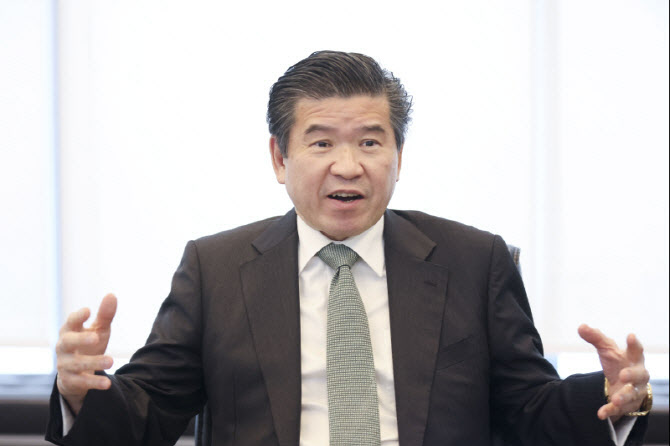
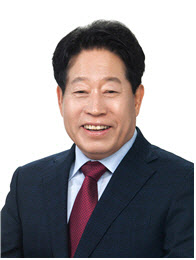
James Kim, Chairman and CEO of AMCHAM Korea. (Photo: Young-hoon Lee)
Chairman Kim views the current trend not as “outright decoupling” but as a strategic realignment. The core of this shift is diversifying dependence. He analyzes that global companies are structurally reducing reliance on specific countries and strengthening ties with reliable partners. Within this evolving landscape, Kim sees Korea as an increasingly attractive strategic partner with solid technical skills for U.S. “U.S. companies no longer see Korea as a mere production base,” he said. “Korea is now recognized as a strategic technology partner and a potential regional hub in critical sectors directly tied to economic security.”
He identified “energy security” as the key variable in this supply chain transformation. In terms of corporate investment and partnerships, stable supply itself has become a source of competitive advantage. While Korea possesses world-class technology and manufacturing capabilities, Kim pointed out that Korea remains vulnerable to external shocks, including geopolitical risks from the Middle East, exchange rate volatility, and energy price fluctuations.
As a solution, he proposed expanding Korea-U.S. energy cooperation. “The U.S. can be Korea’s most reliable energy supplier, while Korea can play an important role as a partner with advanced industrial and technological capabilities,” Kim said, citing last year‘s memorandum of understanding (MOU) between POSCO International and the Alaska liquefied natural gas (LNG) project as a positive example. Considering the explosion in electricity demand driven by AI, cloud services, and data centers, he predicted the impact of energy cooperation to grow even further. “Energy is directly linked to industrial competitiveness,” he emphasized. “Korea-U.S. energy cooperation is not only about securing supply chain stability, but it is also a critical foundation for maintaining Korea’s competitiveness as a hub for advanced manufacturing and innovation.”
Furthermore, he believes the scope of cooperation can expand beyond semiconductors and batteries to include AI-based industries like bio, digital services, future mobility, aerospace, and defense. These sectors align closely with Korea‘s national strategic industries initiative known as “ABCDEF”: AI, Bio, Contents, Defense, Energy, and Factory (Manufacturing). “The ABCDEF strategy provides a clear direction for expanding Korea-U.S. cooperation,” Kim said. “These are areas where the strengths of both countries complement one another and where strategic interests converge.”
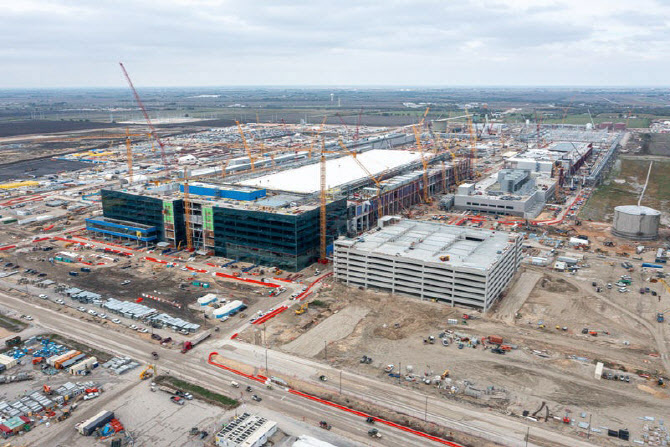
Samsung Electronics' semiconductor plant under construction in Taylor, Texas, USA. (Photo: Samsung Electronics)
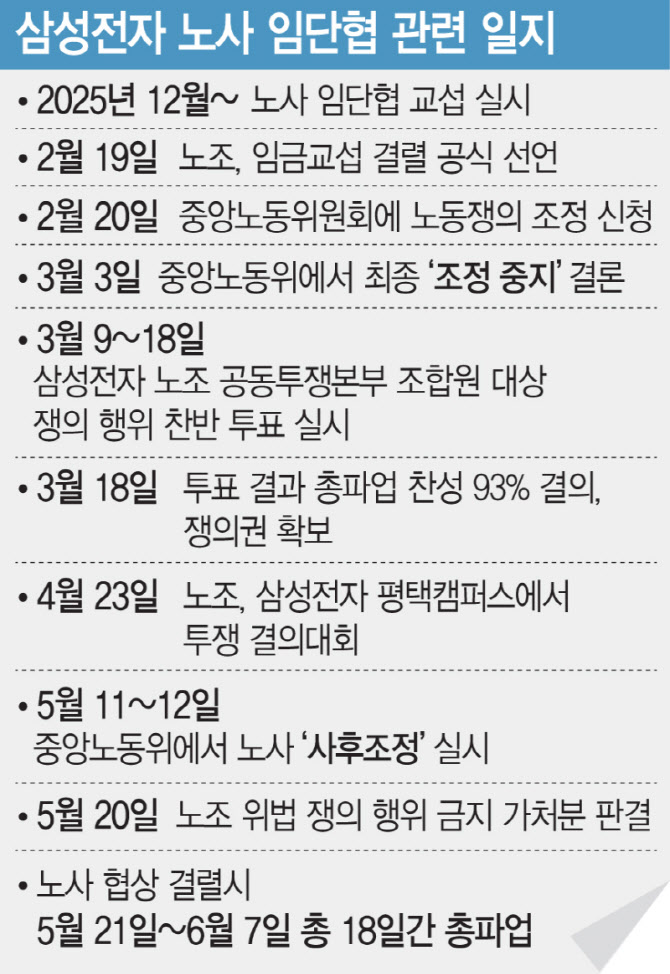
Korea still faces several hurdles for its potential as a supply chain partner to translate into actualinvestment attractiveness. Chairman Kim cited complex regulatory environment, excessive legal liability placed on corporate executives, and broader CEO-related risks as major factors discouraging Korea’s investment. He expressed particular concern over the recent labor-management conflict and possible strike at Samsung Electronics. “If a strike actually occurs, it won‘t only disrupt Samsung’s operations, but it could also significantly affect U.S. AI and advanced technology companies,” Kim warned. “Such situation would impact the Korea‘s hard-earned global standing.” He added that Korea should reduce corporate burdens by by aligning them with global standards, including IT network separation and cloud restrictions ease in the financial sector.
Regarding Korean companies entering the U.S. market, he sees both opportunity and challenge. While the U.S. push for expanded domestic production is an opportunity, he advised companies need strategic approaches tailored to the differing regulatory and policy environments across individual U.S. states. “Companies that adopt a long-term, localized approach shall succeed,” he emphasized. “Building local partnerships and designing corporate strategies in line with U.S. policy directions are essential.”
Chairman Kim believes the Korea-U.S. partnership is undergoing a major turning point in this, the 73rd year of the alliance. What began as a security alliance is now evolving into a comprehensive strategic partnership covering technology, supply chains, energy, AI, and economic security. He highlighted that Korea possesses strong fundamentals, including world-class industries, highly skilled talent, and advanced infrastructure.
“The key to future competitiveness lies in how effectively these strengths are connected to a corporate environment that meets global standards,” he said.
◇◇ About James Kim…
△ B.A. in Economics, University of California, Los Angeles (UCLA) △ M.B.A., Harvard Business School △ Former CEO, GM Korea △ Former CEO, Microsoft Korea △ Former CEO, Yahoo! Korea △ Member, Council on Technology and Security Cooperation (CTSC) △ (Current) Chairman & CEO, American Chamber of Commerce in Korea (AMCHAM) △ (Current) Chairman of the Board, Mirae Asset Global Investments △ (Current) Outside Director, Hyundai Mobis