Ki-moon Ban Voices Deep Concern Over “Trump Bypassing Korea in North Korea Nuclear Talks” [ESF2026]
[Sub-Title]
Ki-moon Ban and Hamre Hold Special Dialogue at Edaily Strategy Forum
Hamre: “Posting Photo of Jong-un Kim Was to Divert Attention from Iran Failure”
Ki-moon Ban: “North Korea‘s Two-State Statement Is Practically a Declaration of Permanent Division”
Hamre: “Transition of Wartime Operational Control Should Be Judged by Actual Readiness”
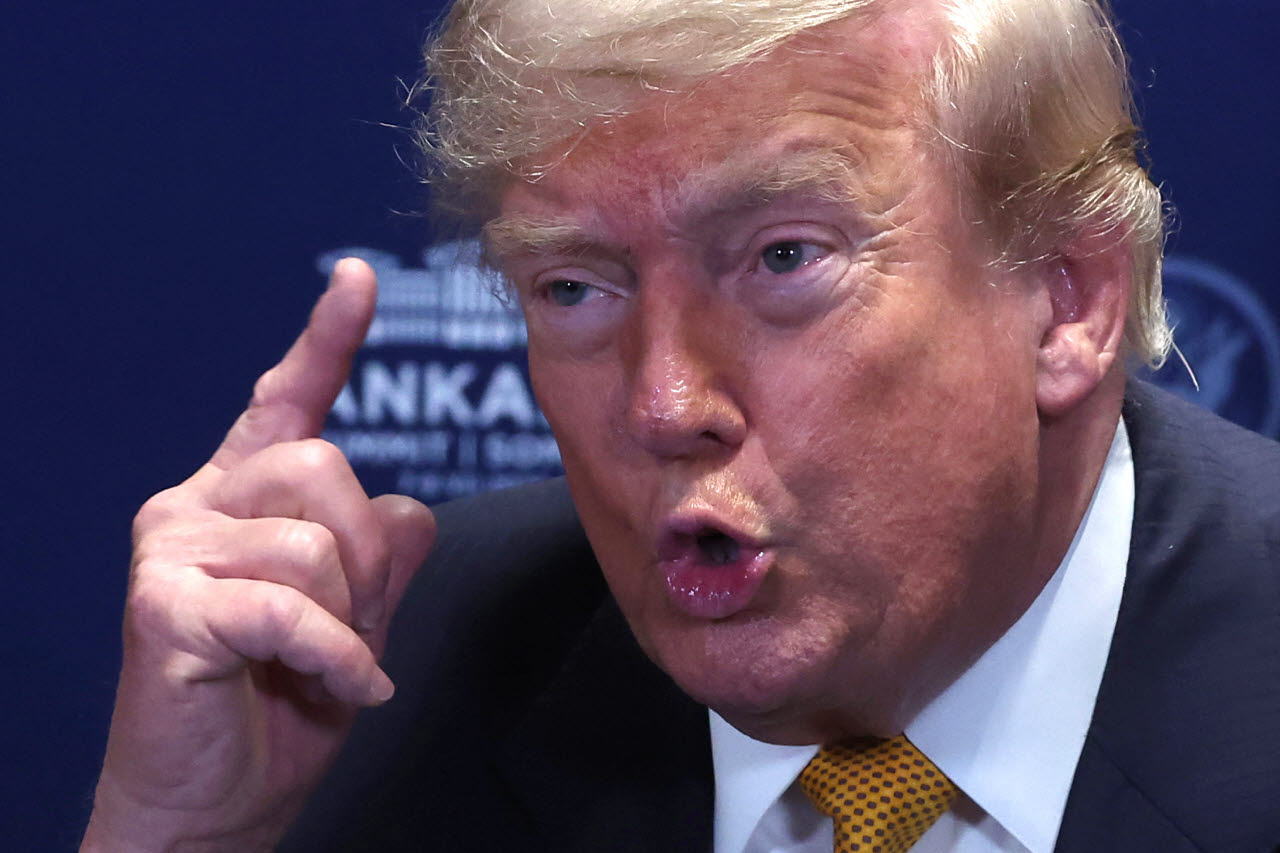
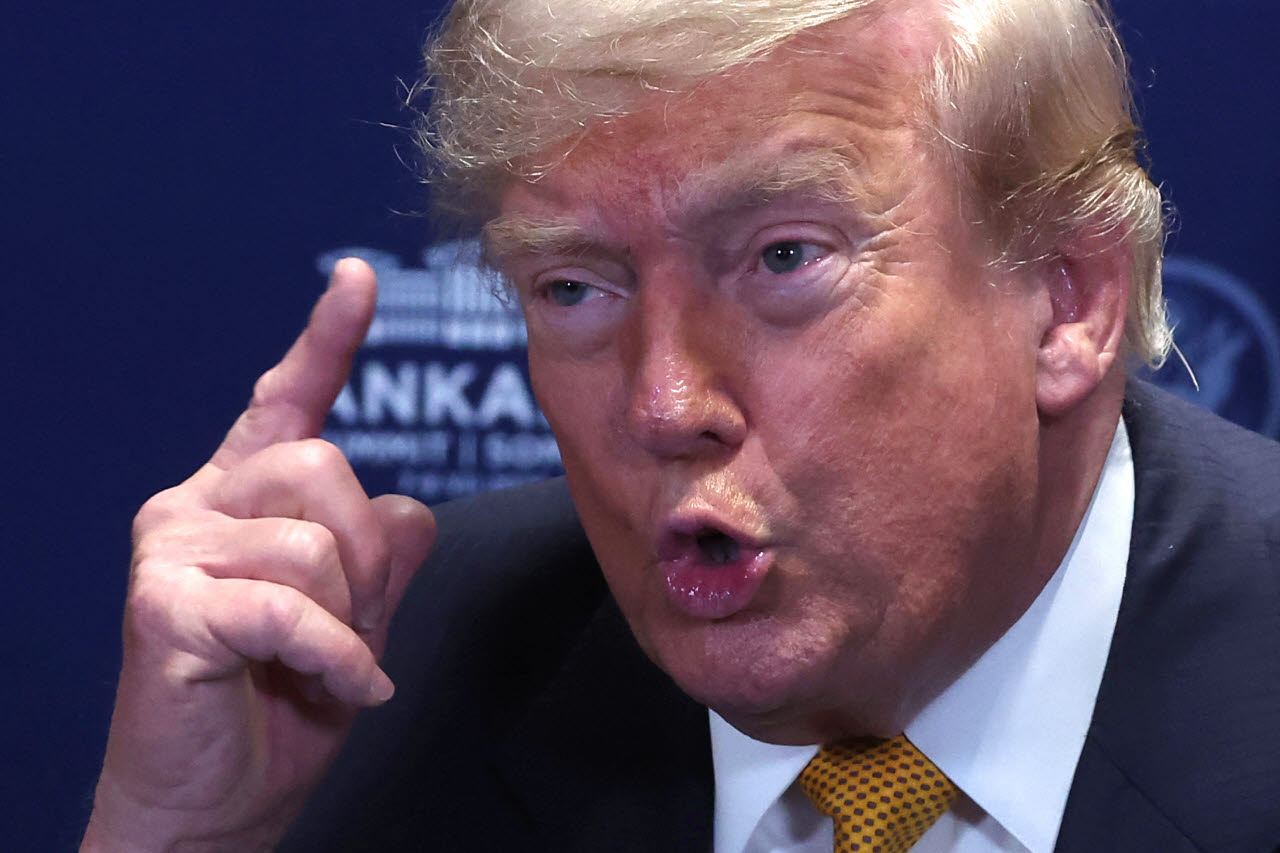
[Edaily Joo-Won Seong Reporter] “Even if Donald Trump secures another face-to-face meeting with Kim Jong-un, I am profoundly concerned whether he will genuinely and sufficiently consult with Korea first.” (Ki-moon Ban, Former UN Secretary-General)
“Donald Trump does not have a well-crafted plan for North Korea.” (John Hamre, CSIS Chairman Emeritus)
Former United Nations Secretary-General Ki-moon Ban, now Chairman of the Ban Ki-moon Foundation for a Better Future, and John Hamre, Chairman Emeritus of the Center for Strategic and International Studies (CSIS), sharply criticized the Trump administration’s lack of a Korea Peninsula strategy during a special dialogue at the 17th Edaily Strategy Forum held at the Shilla Hotel in Seoul on June 16. The two leaders strongly criticized what they described as the lack of a coherent Korean Peninsula strategy within a potential Trump administration while also sharing candid perspectives on the need for the transition of wartime operational control (OPCON) and strengthening Korea‘s global diplomatic capabilities.
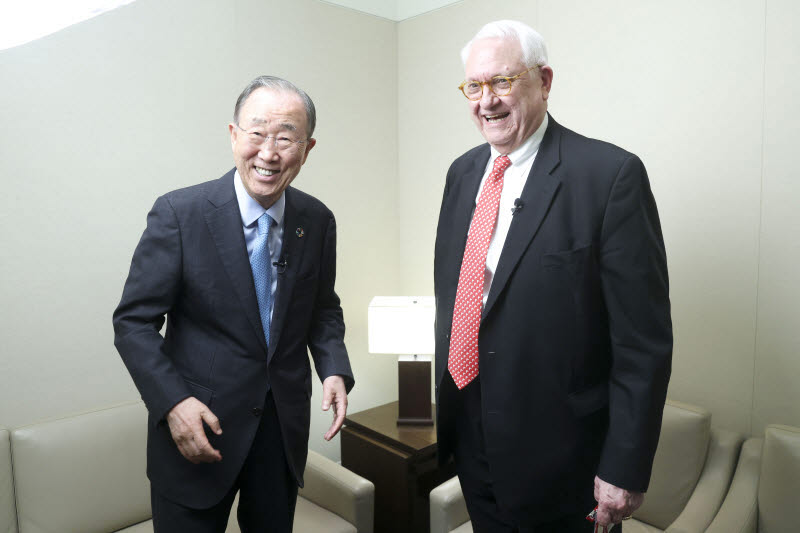
Ki-moon Ban , Former UN Secretary-General (Left) and John Hamre, Chairman Emeritus of the Center for Strategic and International Studies (CSIS), greet each other before their dialogue at the 17th Edaily Strategy Forum (Edaily Strategy Forum 2026) held at the Shilla Hotel in Jangchung-dong, Jung-gu, Seoul on June 16.(Photo=Young-hoon Lee/Edaily)
Former Secretary-General Ban expressed concern that Trump might once again engage directly with Pyongyang without adequate consultation with Seoul. Referring to Trump‘s visit to Gyeongju during last year’s Asia-Pacific Economic Cooperation (APEC) Summit, Ban noted that Trump appeared more focused on sending signals to North Korea than participating fully in official events. “If Trump has an opportunity to meet Jong-un Kim again, I am deeply concerned whether Trump will sufficiently consult with the Korean government, particularly President Lee Jae-myung,” Ban said. He voiced fears that Trump might not treat Korea as an equal alliance partner and could attempt to address the North Korean nuclear issue unilaterally with the U.S.
Both expressed a pessimistic outlook on prospects for North Korea‘s denuclearization. Ban pointed out, “At the recent Nuclear Non-Proliferation Treaty (NPT) review conference in New York, a resolution calling for North Korea’s denuclearization failed because Russia exercised its veto,” and emphasized, “It is very serious that neither China nor Russia is urging North Korea toward denuclearization.”
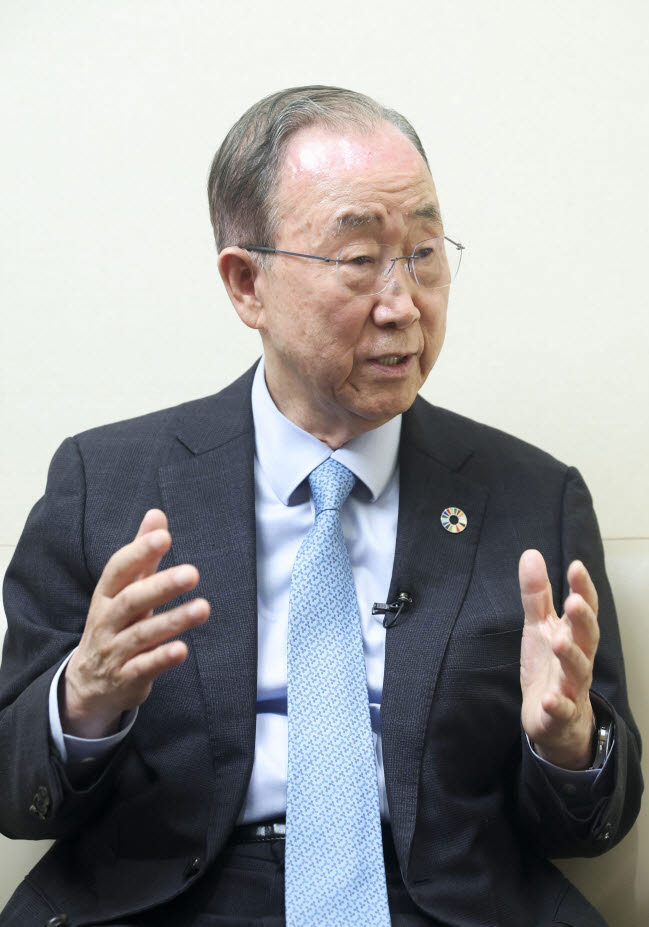
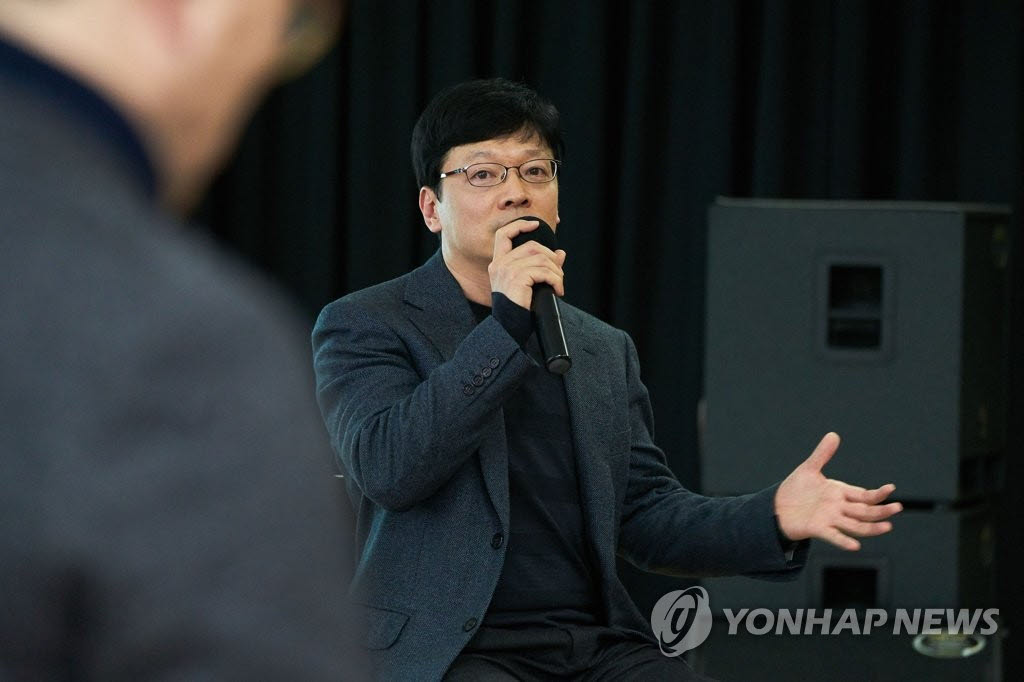
Ki-moon Ban, Former UN Secretary-General, speaks during his dialogue with John Hamre, Chairman Emeritus of the Center for Strategic and International Studies (CSIS), at the 17th Edaily Strategy Forum (Edaily Strategy Forum 2026) held at the Shilla Hotel in Jangchung-dong, Jung-gu, Seoul on June 16.(Photo=Young-hoon Lee/Edaily)
On the issue of OPCON transition, both agreed that actual conditions must be met first. Chairman Hamre said, ”It is very positive that President Jae-myung Lee is significantly increasing defense spending,“ but assessed, ”For effective OPCON exercise, intelligence (J2), operations (J3), and strategic planning (J5) must be integrated, which the Korean military has not yet reached that level.“ He emphasized, ”Rather than an artificial timeline like 2027, it would be better to agree on a process to jointly evaluate actual readiness. In a situation where provocative North Korea wants permanent tension, Korea must not prematurely weaken its own command integrity.“
At the end of the dialogue, Chairman Hamre offered pointed observations on Korea‘s global diplomatic infrastructure. ”Korea’s economy is approximately 2.5 times larger than the Netherlands‘, yet its foreign ministry is only half the size,“ he pointed out. ”Korea’s Ministry of Foreign Affairs has remained overly focused on four major powers, U.S., China, Russia, and Japan, for too long. He stressed, “Korea is now a global nation. It must significantly strengthen its diplomatic capabilities.” Chairman Ban agreed, adding, “With both the U.S. and the European Union (EU) facing instability, now is the time for Korea to step forward and play a larger role on the international stage.”
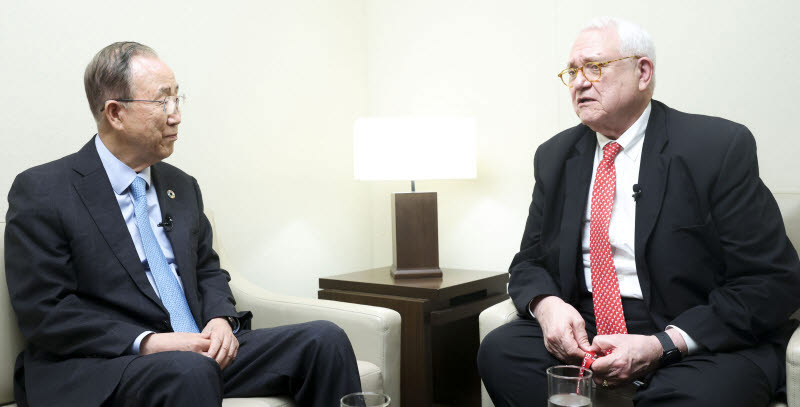
Former UN Secretary-General Ki-moon Ban (Left) and John Hamre, Chairman Emeritus of the Center for Strategic and International Studies (CSIS), engage in dialogue at the 17th Edaily Strategy Forum (Edaily Strategy Forum 2026) held at the Shilla Hotel in Jangchung-dong, Jung-gu, Seoul on June 16. (Photo=Young-hoon Lee/Edaily)