“China Weaponizing Rare Earths and Other Supply Chains… The Fallout Will Hit Korea, Moving Beyond the U.S.” [ESF 2026]
[Sub-Title]
Day 2 of the 17th Edaily Strategy Forum
Presentation by Professor Ki-soon Park, Graduate School of China Studies, Sungkyunkwan University
Rising Trade Friction Due to China‘s Parts and Materials Localization Policy
“Korea Must Establish an Industrial Policy Control Tower”
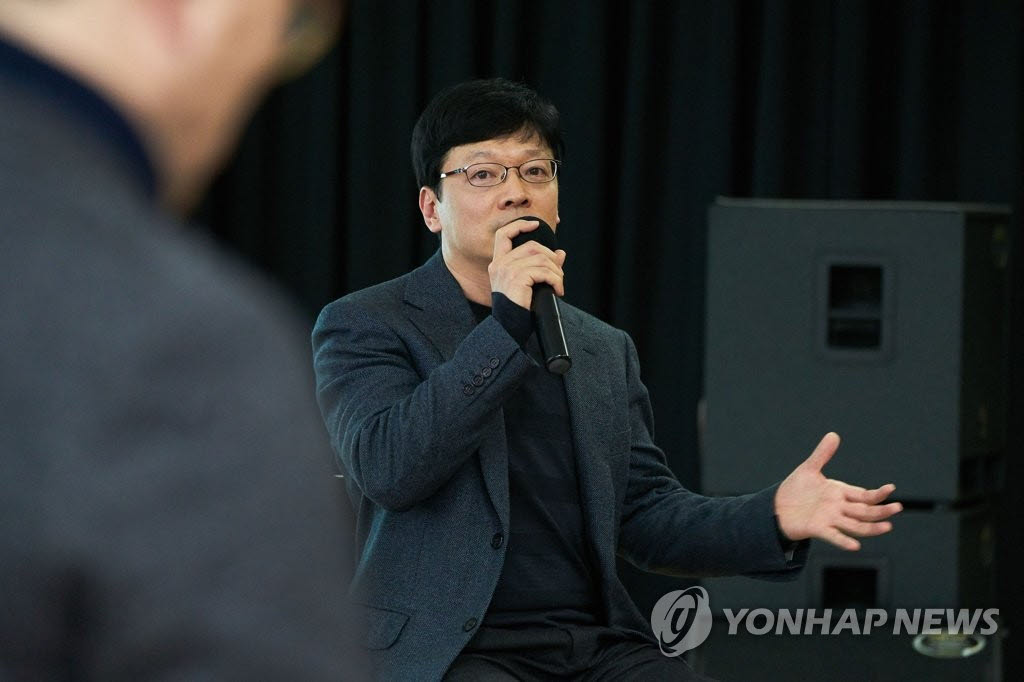
[Edaily By Reporter Eung-tae Kim and Min-ji Son] Professor Ki-soon Park, Graduate School of China Studies, Sungkyunkwan University said on the 17th that “if China weaponizes key supply chains, Korea will not be free from trade frictions, just like the U.S.”
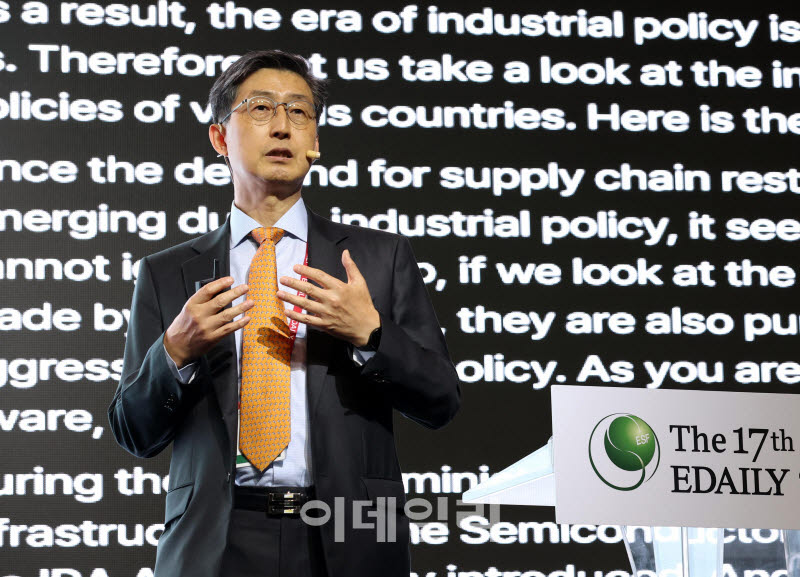
The 17th Edaily Strategy Forum commenced on June 17 at the Shilla Hotel in Jung-gu, Seoul, under the overarching theme: "The Age of Power, Recasting Civilization : Who Designs the New World?" Professor Ki-soon Park at the Graduate School of China Studies at Sungkyunkwan University and former President of the Samsung Economic Research Institute in China, delivers a speech focusing on the theme: “Supply Chains Are Security - Opportunities and Risks in Korea-China Industrial Cooperation in the Era of Supply Chain Realignment" (Photo = Jin-hwan Noh, Edaily Reporter)
Professor Park diagnosed that China is attempting to weaponize indispensable components and raw materials, such as rare earth elements and gallium, as the U.S. is applying intense economic pressure on China via aggressive tariff policies justified by national security interests. “Chinese scholars proudly claim that dominating key supply chains is like possessing nuclear weapons in the economic and industrial domain,” he noted. “Whenever the U.S. tightens restrictions on China, Beijing counters them by weaponizing its supply chains, making resolution increasingly difficult.”
He also pointed out that China’s shift toward export-driven policies to resolve sluggish domestic consumption and overproduction could become a risk factor for neighboring countries. “Inside China, consumption is not rising, while investment and excess production are increasing, so companies are shifting toward exports,” Park explained. “”That is one of the primary reasons for growing trade friction between China and importing nations.“
He suggested that Korea should prepare integrated countermeasures in response to China‘s industrial policy. ”Since the 1990s, Korea has shifted from state-led policy to a market economy-centered system, and as a result, industrial policy has been carried out in a fragmented and unsystematic way,“ he said. ”We need to establish a central industrial policy control tower to formulate long-term, cohesive response strategies.“