Jiyoon Kim, Visiting Professor at Yonsei University’s Institute of East and West Studies and an expert on U.S. politics, shared this sobering outlook when asked about Korea‘s path forward amidst rising global uncertainty. She is scheduled to deliver a keynote speech at the 17th Edaily Strategy Forum (ESF), to be held on June 16~17 at The Shilla Hotel Seoul, under the theme: “The Age of Competition and Fragmentation: Countries Standing at a Crossroads of Choice.”
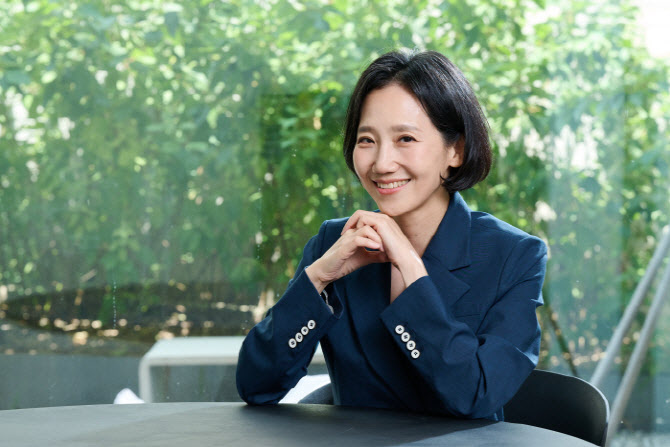
Jiyoon Kim, Visiting Professor at the Institute of East and West Studies, Yonsei University. (Photo: Courtesy of Professor Kim)
Kim diagnosed that the U.S. has overtly changed its method of maintaining hegemony, presenting “bills” for security and trade. U.S. is moving away from being the “world’s police officer,” seeking to reduce its interventionist footprint and associated costs, a stark contrast to its historical role in mediating global conflicts and providing military aid.
Indeed, President Trump is placing a heavy burden on allies through measures such as imposing tariffs and demanding investment. Regarding the U.S.-Iran conflict, he publicly criticizes allies who show reluctance in deploying troops to the Strait of Hormuz. When it comes to Korea, President Trump has expressed his dissatisfaction by making remarks such as “they are not helpful,” and has even exaggerated the size of the U.S. Forces Korea (USFK), claiming it to be 45,000 troops when the actual number is approximately 28,500.
Some observers define the foreign policyof the second Trump administration as the so-called “Donroe Doctrine.” This term emerged to suggest that the U.S.‘s shifting stance mirrors the isolationist foreign policy advocated by President James Monroe in the 19th century.
Regarding this claim, Professor Kim explained, “While some view it as isolationism, but in reality, the U.S. has not abandoned its hegemony; rather, the method of maintaining it has changed.” She added, “They still engage in wars and pursue a balance of power, but they are no longer willing to maintain the global order at their own expense as they did in the past.”
She points out that this shift in the U.S. is not solely due to Trump. It is a structural change within the nation itself, rather than a matter of a specific leader. She noted that both Republicans and Democrats are now speaking with one voice, noting that “U.S. Senator Bernie Sanders, who is considered a progressive politician in the Democratic Party, speaks in ways similar to Trump on these issues.”
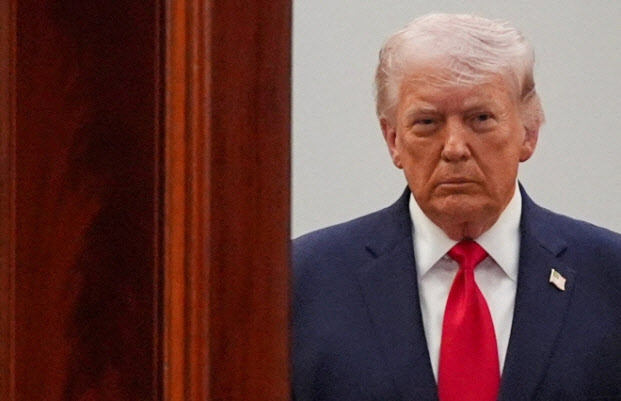
U.S. President Donald Trump. (Photo: Reuters/Yonhap News)
Professor Kim observed that the U.S.-China rivalry is intensifying as the U.S. shifts its method of maintaining hegemony and China challenges it. However, she analyzed, “While the U.S. remains the dominant power, it is no longer overwhelmingly dominant as it was once before. Meanwhile, China, having grown under the U.S.-led international order, has failed to move beyond it or present a sufficient vision to replace the existing order.”
Professor Kim expressed concern that this “clash of the titans” inevitably puts growing pressure on Korea in both security and economic terms. This is because Korea’s industrial sectors overlap significantly with China‘s, and the country is not immune to the challenges of securing energy, an essential foundation of its industrial economy. “The rise of China is both an opportunity and a burden for Korea,” Kim pointed out, adding, “The current global environment, where energy instability is heightened by war, is shaking the very foundation of Korea’s industrial structure.”
She identified expanding security uncertainty as the most direct risk facing Korea, noting, “While Japan‘s strategic importance within the U.S. Indo-Pacific strategy continues to rise, Korea’s relative presence appears to be weakening. There is a possibility that the role and structure of the U.S. Forces Korea (USFK) will change, rather than a simple reduction in troop numbers.” Ultimately, this means that if the regional security environment rapidly deteriorates, Korea could end up bearing more of the primary responsibility for its own security.
Regarding this pivotal moment where South Korea‘s choices have become crucial, Professor Kim remarked, “Korea is now at a major inflection point.” She emphasized that “Clear direction and practical calculations are needed more than ever, rather than strategic ambiguity.”
“International politics is ultimately driven by great-power politics. We must clearly calculate what we can offer and what we can gain in return.,” she advised. “While maintaining room for cooperation with China, we need to be clear about which side we stand on.” Furthermore, regarding the recent war involving the U.S., Israel, and Iran, she emphasized that the issue extends far beyond simple questions of victory or defeat. “It’s not just a matter of who wins or loses; we must look at what changes the war brings to alliances and the international order. This is the moment when we must seriously consider those broader implications.”
◇◇ About Professor Jiyoon Kim
△ B.A. in Political Science and International Relations, Yonsei University △ Master‘s Degree in Public Policy (MPP), University of California, Berkeley △ Ph.D. in Political Science, Massachusetts Institute of Technology (MIT) △ Former Senior Research Fellow, The Asan Institute for Policy Studies △ Senior Advisor, Institute of Democracy Studies Education (Current) △ Visiting Professor, Institute of East and West Studies, Yonsei University (Current)