Noreena Hertz, a world-renowned British political economist and Honorary Professor at University College London‘s (UCL) Institute for Global Prosperity, described the shifting international landscape in these terms during a recent interview with Edaily. According to her, the apparent collapse of the existing international order, evidenced by expanding war and “tariff bombs” targeting even allied nations, is not merely temporary chaos but a fundamental structural transformation. She warned, “Korea is particularly vulnerable,” and advised, “To survive, you must build alternative options.” Professor Hertz is scheduled to deliver a keynote speech on the second day of the 17th Edaily Strategic Forum (ESF), held on June 16~17 at The Shilla Hotel, Seoul.
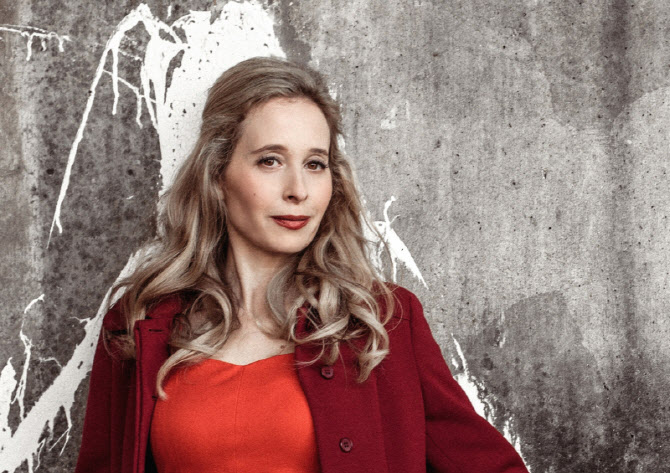
Noreena Hertz, Honorary Professor at the UCL Institute for Global Prosperity. (Photo: Courtesy of Noreena Hertz)
Professor Hertz observed that the international community no longer operates under a single dominant leadership structure. With the U.S. increasingly treating alliances as transactional arrangements and China on the rise, no single hegemonic power is fully replacing another. “Instead, power is becoming more fragmented, and competition is intensifying,” she explained. “Middle powers, ranging from India and the Gulf states to countries controlling critical minerals, maritime routes, or technological capabilities, now have more room to maneuver. But at the same time, the global order is becoming more confrontational and unstable.”
She evaluated that the transformation of the U.S., once the central driver of the international order, is negatively impacting globalization itself. “The U.S. is treating even its alliances transactionally, pressuring other countries to reduce their dependence and diversify their risks,” Hertz noted.
She identified the root cause of the current fractured international order as the “collapse of security and trust.” Repeated crises—including the global financial crisis, the pandemic, and wars, have steadily eroded confidence that governments, institutions, and corporations will protect individuals. She described this as “the complex result of crises, political failures, and technological changes accumulated over the past decade.”
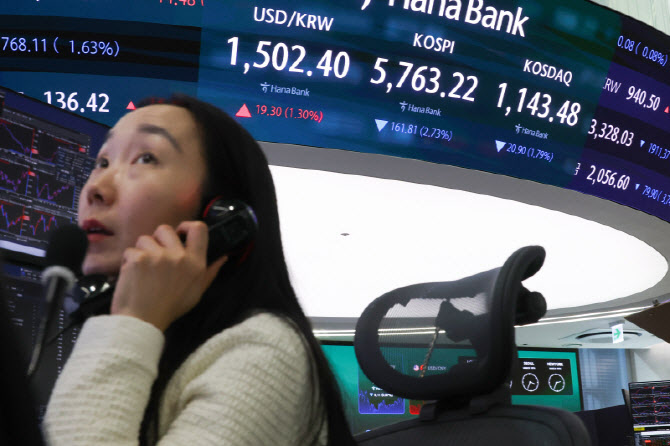
As the war in Iran intensifies, leading to surging oil prices and a sustained strong dollar, the display board at the Hana Bank dealing room in Jung-gu, Seoul, on March 19 shows the KRW/USD exchange rate surpassing1,500 won, hitting its highest level since the global financial crisis, alongside the KOSPI index. (Photo: Yonhap News)
Professor Hertz stressed that to overcome both external and internal risks, Korea must focus on strengthening resilience. Externally, she argued, the country should reduce single-source dependence, expand partnerships, diversify supply chains, and build more strategic options. She noted, “In times of uncertainty, the strongest organizations are not those that bet everything on a single future, but those that create multiple options. The same applies to nations.” She emphasized that trade diversification, strengthening domestic capabilities in core sectors, alliances maintained without complete dependence, investment in innovation, and long-term institutional design all expand a country‘s room for maneuver. Internally, she stressed the importance of investing in social cohesion, noting that a society with high trust and less fragmentation can better absorb shocks and engage in strategic thinking.
Citing Korea’s own history as an example, Professor Hertz advocated for resilience through solidarity. “Korea‘s experience of national mobilization that drove its economic miracle clearly demonstrates the power of collective solidarity.” She added, “In turbulent times, the greatest danger is contraction,” and emphasized that “prosperous leaders and societies look further ahead, listen to a wider range of voices, and pay broader attention to those around them.”
She also advised companies and individuals navigating uncertain times to “broaden their scope.” Professor Hertz warned, “In dangerous periods, instinctive contraction limits judgment and innovation, while risks lead to greater loneliness and fear.” She advised, “In times like these, we must look more broadly and listen to more diverse voices.”
◇About Professor Norena Hertz...
△ MBA, The Wharton School, University of Pennsylvania △ Ph.D. in Economics, University of Cambridge △ Former Associate Director, Centre for International Business and Management, University of Cambridge △ Selected as a Young Global Leader by the World Economic Forum (WEF) △ Former Economics Editor, ITV △ (Current) Board Member, Mattel △ (Current) Board Member, Warner Music Group △ (Current) Board Member, Workhuman △ (Current) Honorary Professor, Institute for Global Prosperity, University College London (UCL)