South Korea‘s plan to cap major shareholders’ stakes in domestic crypto exchanges is unlikely to be legislated in the current National Assembly, as the ruling Democratic Party signals it has little appetite to take up the measure while it pushes ahead with stablecoin-related rules.

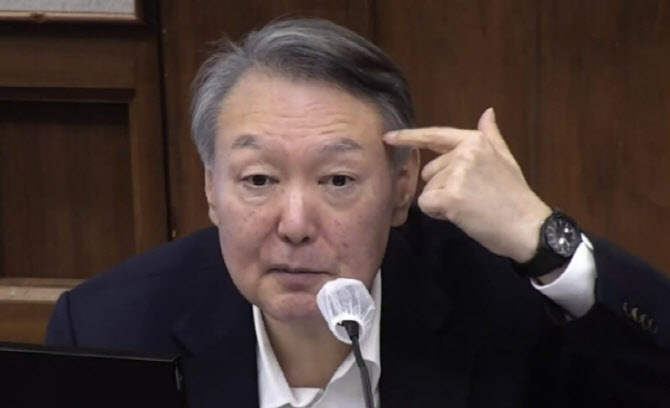
Lee Jung-moon, a chair of the Democratic Partys Digital Assets Task Force (TF).
“Even the stablecoin legislation is being delayed, and if we also debate exchange-ownership restrictions, it will take even longer,” Lee said. “It will be very difficult in practice for exchange equity regulations to be included in this Digital Asset Basic Act.”
Korea’s Financial Services Commission has argued the bill should include a limit on the ownership stake of any single controlling shareholder in a crypto exchange, proposing a cap of roughly 15% to 20% — comparable to the 15% threshold applied to alternative trading systems under the country‘s capital markets law. The regulator has said exchanges function as financial-market infrastructure and that fee-based profits should not be overly concentrated in the hands of a single individual.
If enacted, such a cap would force major platforms — including Upbit operator Dunamu, Bithumb, Coinone, Korbit and Gopax operator Streami — to restructure and sell down equity stakes, according to industry officials. It could also complicate dealmaking, including planned acquisitions involving Naver and Mirae Asset, which have been pursuing takeovers of Dunamu and Korbit, respectively.
The Digital Asset eXchange Alliance (DAXA), which represents the five major exchanges, criticized the proposal in a statement on Monday, warning that “attempts to artificially change private companies’ ownership structures” would undermine the foundations of the domestic digital-asset industry and chill growth.
Lee said the ownership cap is only one of several options the FSC has floated and is not a settled policy direction.
“The stake-cap regulation is just one proposal the regulator brought to us for review — it has not been confirmed as something to 추진,” he said, using the Korean term for “push forward.” He added that many lawmakers in the task force reacted skeptically when they first saw the idea, questioning whether it would derail the stablecoin legislation. “The view inside the task force is negative,” Lee said.
Lee also pointed to the political reality that the governing People Power Party currently holds the chairmanship of the National Assembly‘s Political Affairs Committee, limiting the opposition party’s room to unilaterally set the legislative agenda.
“Because the People Power Party holds the committee chair, we can‘t decide the direction on our own,” Lee said. “Even if we draft a bill with the government, we need the opposition’s cooperation,” he added, signaling the party will pursue a bipartisan approach.
On Wednesday, Kim Sang-hoon, a lawmaker who leads the ruling party‘s special committee on equities and digital-asset “value-up,” said at a policy meeting with major exchanges that a forced dispersion of ownership could blur accountability and trigger unintended side effects, including capital outflows.
The Democratic Party’s Digital Assets Task Force is scheduled to meet on Jan. 20 to discuss details of the Digital Asset Basic Act, Lee said.