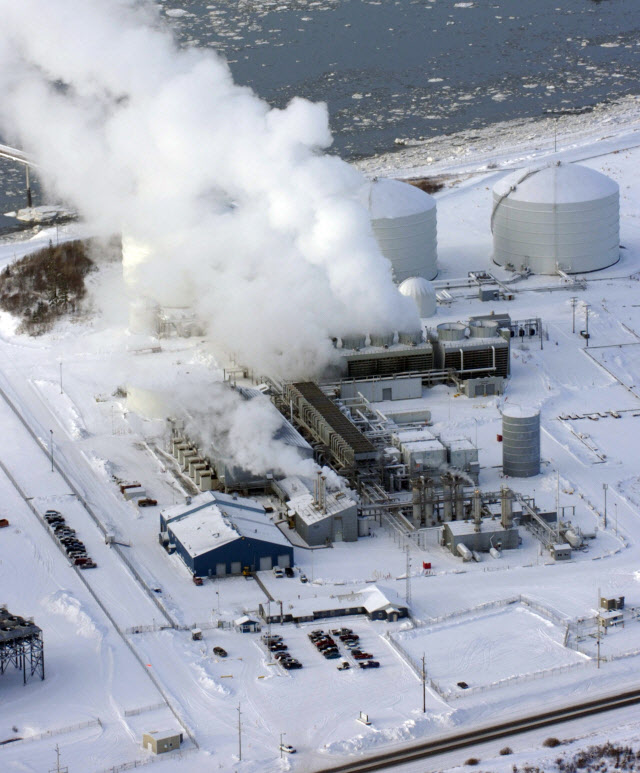
Alaska Nikiski LNG Plant, USA. (Photo: Yonhap News)
According to industry sources on May 11, POSCO International signed a Heads of Agreement (HOA) last year for a strategic partnership with Glenfarne, the developer of the Alaska LNG project, and has officially launched full-scale business cooperation.
Under this agreement, POSCO International will import 1 million tons of LNG annually for 20 years, equivalent to approximately 2.2% of Korea‘s total annual LNG imports of 46.32 million tons. The company will also supply massive quantities of steel materials required for the construction of approximately 1,300km, 42-inch high-pressure natural gas pipeline for the project. In addition to offtake and material supply, POSCO International plans to participate through equity investments, positioning itself as a true business partner rather than a simple buyer, which is expected to open doors for further cooperation opportunities in the future.
In the critical minerals sector, Korea Zinc is accelerating the expansion of its rare earth supply chain within the U.S. Earlier this year, Korea Zinc signed a strategic partnership agreement with U.S. technology company Alta Resources Technologies to launch a rare earth recycling and refining operations using recycled permanent magnets. This strategy aims to secure rare earths, essential materials for electric vehicles (EVs) and the defense industry, directly within the U.S.
This partnership is expected to generate synergies with “Project Crucible,” an integrated smelter construction project being promoted in Tennessee. Project Crucible is a large-scale venture project designed to produce non-ferrous metals, high-purity sulfuric acid for semiconductors, and 11 types of critical minerals. Industry experts are noting its potential to become a core production base for strengthening Korea-U.S. supply chain cooperation.
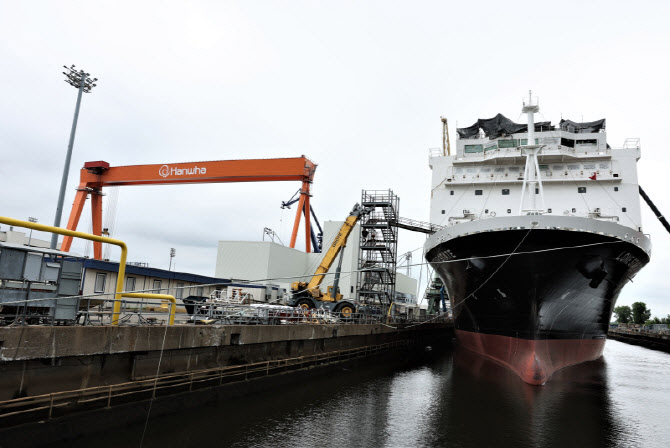
Hanwha Ocean’s Philadelphia Shipyard. (Photo: Hanwha)
The MASGA project, in particular, is gaining momentum through active government-level cooperation discussions. The Korean government recently signed a Memorandum of Understanding (MOU) with the U.S. government to strengthen bilateral shipbuilding cooperation, is discussing the establishment of a Shipbuilding Cooperation Center. In the energy sector, expanding cooperation in nuclear power and LNG is also being actively discussed.
An industry official stated, “We are seeing a simultaneous expansion of cooperation with the U.S. across all strategic industries, including energy, minerals, shipbuilding, and defense. In response to rapidly changing global supply chains and trade environments, it is necessary to further expand cooperation across the entire industrial sectors.”