Specifically, Orum Therapeutics is advancing its degrader-antibody conjugate (DAC) candidate, ORM-1153, into clinical development for acute myeloid leukemia (AML), with plans to enter trials within the year. The company’s strategy of fully internalizing the design of the antibody, linker, and payload has emerged as a key differentiating factor.

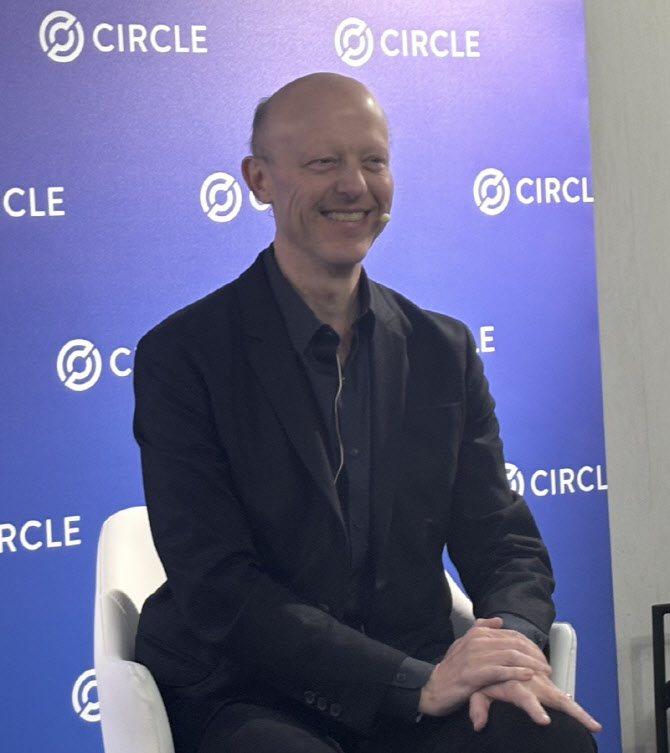
Seungjoo Lee, CEO of Orum Therapeutics (Photo = Orum Therapeutics)
Meanwhile, HLB is approaching FDA decisions for its liver cancer therapy rivoceranib plus camrelizumab and its biliary tract cancer treatment combining rivoceranib with lirafugratinib, expected in July and September, respectively. The company has also outlined a series of upcoming clinical readouts across its pipeline, including solid tumor CAR-T and ophthalmology programs.
Kanaph Therapeutics is preparing to present immune modulation data for its bispecific immuno-oncology candidate KNP-101 at an upcoming global conference, highlighting its approach to enhancing tumor-specific immune activation while minimizing systemic toxicity.
◇Orum Advances DAC Candidate Toward Clinical Entry
Orum Therapeutics has seen investor sentiment strengthen rapidly after formally announcing plans to initiate clinical trials for its next-generation DAC candidate, ORM-1153, within the year. The company’s ambition to take a leading position in emerging drug modalities has further amplified market expectations.
ORM-1153 targets CD123, a protein widely expressed in AML patients, and employs a precision approach designed to selectively eliminate cancer cells. AML is known for its high relapse rate and frequent resistance driven by genetic mutations, making it one of the most challenging hematologic malignancies with significant unmet medical need.
While structurally similar to conventional antibody-drug conjugates in comprising an antibody, linker, and payload, ORM-1153 differentiates itself through its mechanism of action. Instead of delivering cytotoxic agents, it incorporates targeted protein degradation technology, enabling selective removal of disease-causing proteins while potentially reducing off-target toxicity.
The candidate also marks the first application of a fully internally designed antibody by the company, representing a departure from the industry’s typical reliance on validated external antibodies to mitigate development risk. By integrating antibody design, linker, and payload technologies, Orum has sought to enhance overall platform capability.
Preclinical data support this differentiation. Under comparable conditions, ORM-1153 demonstrated more than threefold higher cellular internalization than competing CD123 antibodies and approximately 1.5 times longer durability in tumor suppression. It also maintained efficacy at lower concentrations and showed consistent antitumor activity in TP53-mutant models, which are generally associated with poor prognosis.
A company official stated that ORM-1153 represents the first case combining proprietary antibody design with targeted protein degradation technology and expressed confidence that it could provide a new treatment option for patients who do not respond to existing therapies. The company aims to expand its DAC platform beyond hematologic malignancies into solid tumors as development progresses.
◇HLB Nears Key FDA Decisions
HLB is entering a critical phase as FDA decisions for its oncology drugs approach, fueling renewed investor optimism. The company indicated that regulatory decisions for its liver and biliary tract cancer therapies are expected in July and September, respectively.
At a recent investor meeting in Seoul, Chairman Jin Yang-gon emphasized that the next five months would represent a decisive turning point for the group. He stated that successful approvals could position HLB as the first Korean biopharmaceutical company to independently develop and secure FDA approval for an anticancer drug.
The company also outlined a series of upcoming milestones. Interim clinical data for a solid tumor CAR-T therapy are expected later this month, followed by global Phase 3 results for an ophthalmology treatment in late June. These events are expected to serve as additional catalysts for the company’s pipeline.
HLB has previously faced multiple challenges in the regulatory process for its liver cancer drug. In response, the company restructured its organization and appointed a new CEO late last year as part of efforts to strengthen its regulatory strategy. Chairman Jin noted that the company aims to overcome market skepticism by delivering tangible results.
During the meeting, HLB stated that it is fully prepared for the ongoing FDA review process and is making every effort to ensure a smooth regulatory outcome.

Yang-gon Jin, Chairman of the Board of HLB, speaking at the HLB Group IR event held at the Korea Exchange in Yeouido, Seoul. (Photo = HLB)
◇Kanaph to Present Immune Modulation Data at AACR
Kanaph Therapeutics is drawing market attention ahead of its upcoming presentation at the American Association for Cancer Research (AACR) 2026, where it will disclose new findings on its bispecific immuno-oncology candidate KNP-101, co-developed with Dong-A ST.
KNP-101 combines an interleukin-12 (IL-12) mutein with fibroblast activation protein (FAP)-targeting technology, enabling selective immune activation within the tumor microenvironment. The approach is designed to address the limitations of conventional IL-12 therapies, which are often constrained by systemic toxicity.
The key focus of the presentation is expected to be the regulation of interferon-gamma (IFN-γ) under repeated dosing conditions. IFN-γ plays a central role in mediating antitumor immune responses, but excessive systemic exposure can lead to significant toxicity, making precise control essential.
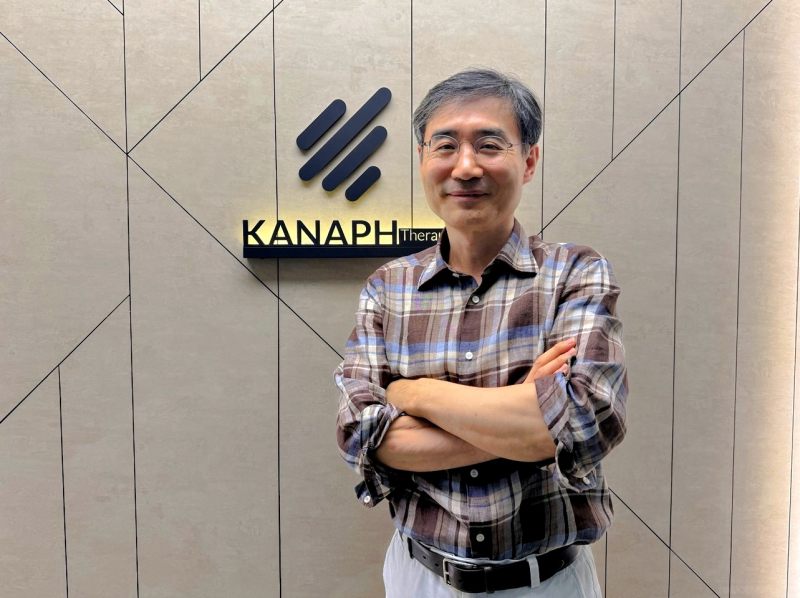
Byung-chul Lee, CEO of Kanaph Therapeutics (Photo = Reporter Lim Jung-yo)
According to the company, preclinical studies across multiple tumor models showed that KNP-101 induced IFN-γ within tumor tissues while minimizing systemic exposure. This suggests the potential to achieve both efficacy and safety, even under repeated dosing conditions.
The data also indicated that IFN-γ response patterns vary depending on dosing intervals and administration frequency, providing insights into optimizing dosing regimens and combination strategies in future clinical development.
Chief Technology Officer Jang Ji-hoon stated that the findings provide a clearer understanding of KNP-101’s mechanism of action and immune regulatory characteristics, which will be leveraged to refine clinical development strategies moving forward.